One Block, One Room, No Escape: Eight Shorts That Refused to Start Over

Photo by Photo by Francisco Arnela on Unsplash on Unsplash
There is a particular kind of stubbornness on display in the single-block woodcut short: the filmmaker commits to one carved surface, one room, one uninterrupted take, and then refuses the escape hatches that digital editing dangles in front of every artist. No reshoots. No second block. If the image fails, it fails in public.
We find this stubbornness bracing. Below are eight American shorts, made across the last several years, that treat limitation not as a budget constraint but as an argument. Not all succeed. That is rather the point.
The Argument for the Unrevisable
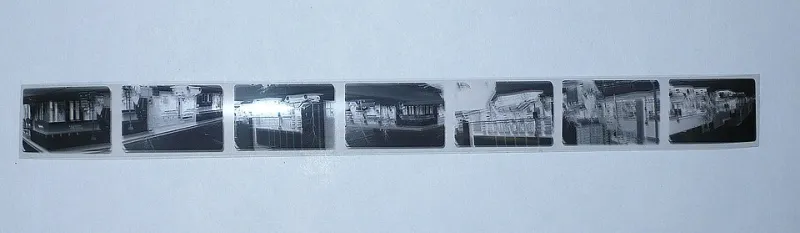
Most experimental film is, secretly, an editing art — hours of material distilled into minutes. The single-block short inverts this. The artist carves a composition, prints it, photographs it, then carves back into the same block and prints again. Each state destroys the last. There is no going back to the earlier image except in memory, and the film becomes a record of irreversible decisions.
That irreversibility is what elevates the best of these works from novelty to statement. In an era when any frame can be revised indefinitely, a film that cannot be revised is making a claim about time itself.
Eight Films, Eight Constraints
1. The kitchen-window study. A Midwest filmmaker carved a single view of her mother's kitchen window and printed it through forty states of decay, the room slowly dissolving as the block gave way. The most affecting of the eight precisely because nothing changes except everything.
2. The hallway loop. One corridor, one block, reprinted until the wood split. The crack becomes the climax.
3. The self-portrait that ate itself. A Texas artist carved his own face and reworked it until it was unrecognizable — a meditation on portrait photography's promises.
4. The weather report. A single rural landscape block, re-inked daily for a season. The film is effectively a diary written in pressure.
5. The subway platform. One location, one take of the block being carved on camera, the image emerging mid-film. Gimmicky in description, hypnotic in practice.
6. The erased sign. A storefront block, its lettering gradually carved away until the business disappears from its own name.
7. The two-state film. The artist permitted herself exactly two versions of the block and structured the entire short around the cut between them.
8. The unfinished block. Printed while still in progress, the film ends when the artist decides the image is done — and the ending is therefore a judgment, not a cue.
Why This Matters Beyond the Format
Skeptics will note, fairly, that constraint-driven work can be a crutch of its own — a recipe for sameness dressed as rigor. Some of the eight shorts above are thin. But the strongest make a case that American experimental cinema's most interesting frontier is not new technology but old discipline: the willingness to be stuck with your choices.
The single-block short will never dominate a festival program, and it should not. It exists as a corrective — a small, splintery reminder that cinema was always a print medium, and that some of the most radical gestures available to a filmmaker today involve simply refusing to press undo.