Grain at a Premium: The Strange Economics of America's Roughest Frames
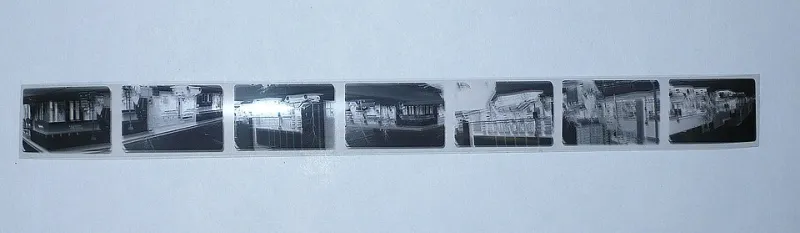
Photo: Gisling, CC BY-SA 4.0, via Wikimedia Commons
There is a persistent myth in American independent film that roughness is free. That if you simply refuse the algorithm of the plug-in, the LUT, the drone shot, the work will cost nothing but time. Spend an afternoon with the accountants — or more often, the artists doubling as their own accountants — behind the country's handmade animation scene, and the myth dissolves faster than emulsion in a developer bath.
The paradox is stark. At precisely the moment audiences have learned to crave texture — the visible tooth of paper, the shiver of a hand-inked line — the materials that produce that texture have become luxury goods.
The Invoice Behind the Imperfection
Consider the actual costs. A 400-foot roll of 16mm black-and-white reversal stock, once a bargain-bin item, now routinely runs north of a hundred dollars before processing. Scanning that footage at a resolution worthy of a festival DCP can add several dollars per foot. An optical printer, if you can find one, is a garage-sale relic commanding antique-store prices, its parts increasingly fabricated by the artists who use them.
"People assume that because my frames look crude, my budget is crude," one Pacific Northwest animator told us, requesting anonymity because her grant applications are pending. "Every second of finished footage represents hours of carving, inking, and re-shooting. My cost per minute would embarrass a commercial studio."
The labor question is the sharpest edge of the problem. Hand-carved animation — the direct-on-film tradition of scratching and painting the strip itself — cannot be outsourced, accelerated, or automated. It is, by definition, the most expensive kind of labor: singular, skilled, and slow.
Grant Writing as Second Craft
How, then, do these films get made? The answer, in the American context, is a patchwork that would frustrate a spreadsheet.
Regional arts councils remain the backbone. State-level grants — from bodies like the New York Foundation for the Arts or the Texas Commission on the Arts — routinely fund materials and processing fees, though rarely the artist's time. National residencies, from the MacDowell Colony to the Experimental Film Workshop circuit, offer the more valuable currency: uninterrupted weeks.
Then there is the newer economy of pre-sales and micro-patronage. A growing number of experimental filmmakers announce editions of hand-processed prints, carved test strips, or contact-printed frames sold directly to collectors before a film is finished. It is less crowdfunding than a kind of patronage model revived — the print as receipt.
"I sell the offcuts," one Ohio-based filmmaker explained. "The frames that didn't make the cut. Collectors want the scar tissue of the process. That's literally what funds the process."
Who Gets to Be Imperfect
Here is where the economics turn political, and where our editorial position should be stated plainly: the rising cost of tactile filmmaking is quietly narrowing who makes it.
An artist with family money, a partner's salary, or a tenure-track position can absorb a $2,000 lab bill. A 24-year-old in Detroit working service jobs cannot — no matter how fierce their vision. The aesthetics of roughness, marketed by streaming platforms as authenticity, risk becoming the exclusive property of those who can afford to be unslick.
This is not a call for nostalgia, nor for cheaper film stock that will not come. It is a call for the funding infrastructure to recognize that in this corner of cinema, materials are the labor. A grant that covers stock but not time misunderstands the medium it claims to support.
Festival programmers, too, have a role. Paying screening fees — even modest ones — rather than the customary exposure, would return some circulation of money to the artists whose scarcity economics are most punishing.
The Value of the Expensive Scratch
None of this diminishes what is being made. If anything, the films emerging from this squeeze — works by artists like those championed at Ann Arbor's film festival or the collective screening scenes of Los Angeles — carry their costs visibly, in every tremor of the line. That visibility is the point. A film whose surface admits its own expense is making an argument about value that the frictionless image cannot.
Grain, it turns out, was never cheap. We simply didn't used to count.
The sooner the field's funders count with it, the sooner the roughest frames in America can be made by everyone — not just those who can afford the scratch.