The Carved Frame: How Hand-Cut Textures Are Reshaping American Short Film
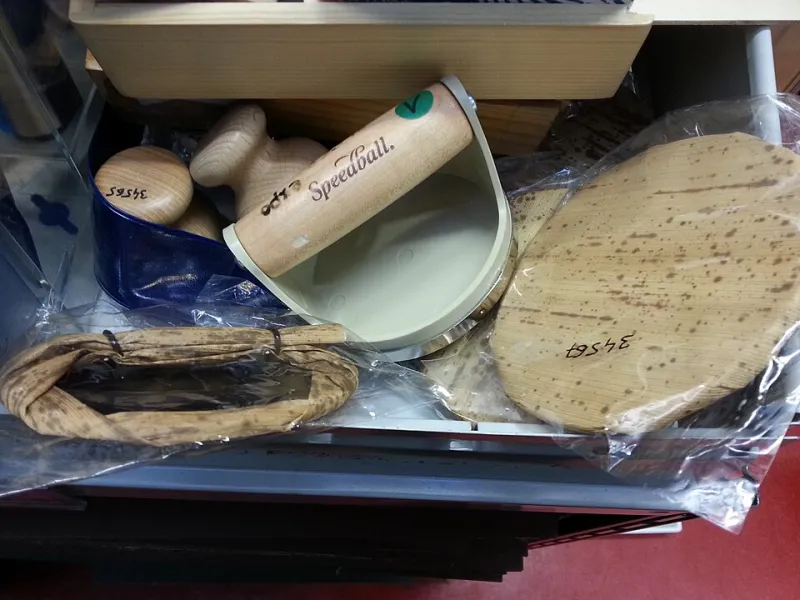
Photo: Popolon, CC BY-SA 3.0, via Wikimedia Commons
There is a particular sound a linoleum gouge makes when it bites. Filmmakers who work in relief printmaking describe it as a kind of commitment — once the blade moves, the surface is changed forever. It should come as no surprise that a growing cohort of American short film directors, raised on infinite undos and reversible color grades, have begun to covet exactly that irreversibility.
The Return of the Visible Mark
Consider the programming at recent editions of Slamdance, the Ann Arbor Film Festival, and the perennially adventurous Animation Show of Tears in New York. Alongside the expected digital experiments, a distinct texture keeps surfacing: frames that look cut rather than rendered. Stop-motion puppets whose seams are left unpainted. Rotoscoped figures whose outlines wobble like a worn printing block. Motion graphics built from scanned woodcuts, their grain vectors digitized but never sanded down.
This is not a single technique. It is closer to a shared disposition — a suspicion of the frictionless image.
Collectives, Not Studios
What distinguishes the current wave from earlier analog revivals is its organizational shape. Rather than emerging from studios, these works tend to come from small collectives operating out of print shops and community art centers. Groups in Portland, Philadelphia, and Chicago have begun hosting screenings in letterpress studios, projecting films against walls still bearing the ghost of poster runs. The audience, in these rooms, is often holding the same tools the filmmakers used.
One can hear the influence of predecessors — the inked textures of Frédéric Back, the gouged urgency of David Sandlin, the painterly resistance of direct-on-film animation. But the contemporary impulse is less about replicating those styles than about reclaiming process as subject matter.
The Digital Paradox
A skeptic will note, correctly, that much of this 'imperfection' is manufactured. Plug-ins now sell convincing woodcut grain by the license. A digital filter can gouge where a blade once did, and at a fraction of the labor. Does the provenance of a texture matter if the eye cannot tell the difference?
Here the movement's honest defenders offer a twofold answer. First, the eye usually can tell. True hand-cut imagery carries irregularities no algorithm has fully faked — the hesitation of a blade, the accidental catch of end-grain. Second, and more importantly, audiences increasingly care about process the way diners care about sourcing. Knowing a frame was carved, even once, changes how it is received.
Movement or Mood?
Whether this constitutes a lasting aesthetic movement or a passing nostalgia is genuinely unresolved. Analog revivals have come before — the vinyl resurrection among them — and each was accused of sentimentality. What gives this one its durability, perhaps, is that it is not anti-digital. Most of these filmmakers scan, composite, and distribute online. They are not fleeing the digital; they are insisting it carry the fingerprint of the hand.
For a production culture named, as we are, for the carved image, that insistence feels less like a trend than a homecoming. The frame, like the block, remembers every cut. The question for American short film is not whether audiences want texture. It is whether filmmakers can sustain the patience texture demands.