The Edition as Budget Line: Woodcut Posters and the Financing of American Experimental Shorts
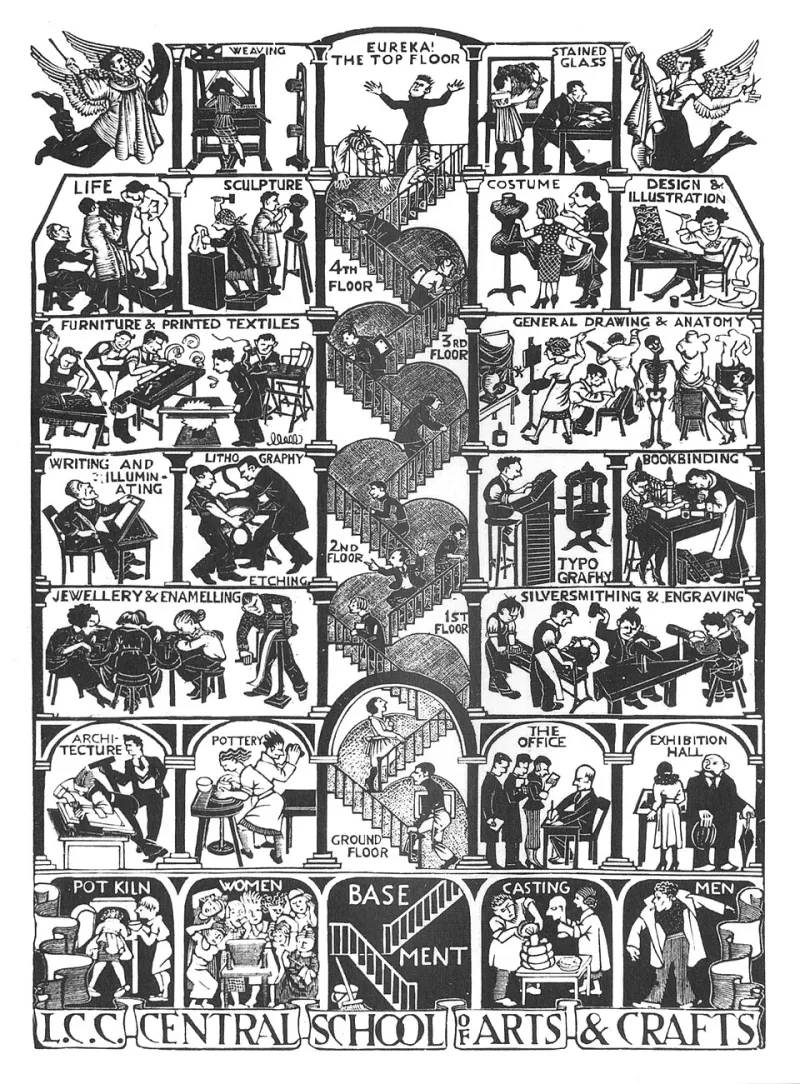
Photo: Herry Perry, Public domain, via Wikimedia Commons
The budget for an experimental short rarely resembles a conventional film budget. There is no star salary to trim, no marketing line that can be deferred, no distribution guarantee waiting at the end of a festival run. What remains is material, labor, lab fees, submission costs, and the quiet expense of time. In this environment, a signed and numbered woodcut poster can do something a digital one-sheet cannot: it can convert a film’s visual argument into a collectible object with a defined edition size, a price, and a paper trail.
A Print Run With a Purpose
The logic is borrowed directly from printmaking. An artist carves a block, pulls a fixed number of impressions, signs and numbers them, and retires the block or preserves it as an artifact. Collectors understand this vocabulary. They know that an edition of forty is not the same as an open-ended reproduction, and they know why the last impression may carry a different weight than the first. Filmmakers are now using that vocabulary to underwrite production and festival travel, often before a short has had its first public screening.
The poster is rarely an afterthought. In the strongest examples, the commissioned artist works from the film’s visual grammar—its grain, its recurring shapes, its palette, its cuts—rather than from a generic promotional still. The result is not merchandise in the usual sense. It is a parallel work, produced in a different medium, that shares a sensibility with the film. That distinction matters to buyers. A woodcut poster that could hang in a print fair without apology is more likely to be purchased by someone who cares about the film’s formal choices, not merely its plot summary.
The Economics of a Small Edition
The math is modest but meaningful. A limited run of thirty to eighty prints, priced between sixty and three hundred dollars depending on the artist’s reputation and the complexity of the block, can generate several thousand dollars before shipping and fees. That sum may cover a portion of post-production, a festival submission strategy, travel for a premiere, or the rental of a small exhibition space for a self-organized screening. It is not a substitute for institutional funding, and it is not presented as one. It is a line item that did not exist a decade ago in most experimental film budgets.
What makes the model durable is its transparency. Edition size, paper stock, ink, printing method, and signing conventions are disclosed. Buyers are not purchasing a vague promise of access; they are purchasing a bounded object. Filmmakers, in turn, are not asking for donations. They are offering a work with a market convention attached. That shift in framing—from patronage to editioned exchange—has made the proposition legible to collectors who might hesitate to give money to a production with no tangible return.
Why American Collectors Are Buying In
The appeal is not confined to the coasts. Print fairs in Chicago, Austin, Portland, and smaller college towns have cultivated buyers who already understand the difference between a reproduction and an impression. Many of those buyers are also filmgoers who have grown tired of the ephemeral nature of streaming culture. A poster that arrives in a tube, signed by the artist and accompanied by a note from the filmmaker, offers a physical relationship to a work that may only screen a handful of times.
There is also a locality to the transaction. When a filmmaker commissions a woodcut artist in the same city, the edition becomes a record of a regional collaboration. The buyer is not simply supporting a film; they are supporting a network of paper suppliers, print shops, and small galleries. In an American independent film landscape that often laments the disappearance of middle-tier infrastructure, this is a modest but real form of rebuilding. It connects the screening room to the print studio, and the print studio to the collector’s wall.
Risks and Limits
The model is not immune to the pressures of speculative collecting. If edition sizes are inflated, or if the poster bears little relation to the film, buyers will learn to discount the offer. If filmmakers treat the print as a last-minute fundraiser rather than a collaborative work, the result can feel transactional in the wrong way. The strongest projects avoid this by commissioning the artist early, budgeting for the edition as part of the film’s overall design, and refusing to print more impressions than the edition states.
There is also the question of labor. Woodcut is slow. Carving, proofing, and pulling an edition can take weeks. Filmmakers who expect a poster to be produced on a festival deadline misunderstand the medium. The print run must be planned with the same seriousness as a shoot day or a sound mix. When it is, the object carries the evidence of that time, and collectors respond to it.
A Parallel Economy for Hand-Crafted Cinema
The broader significance is not that every experimental short needs a poster. It is that the edition offers a model for thinking about a film’s life beyond the screen. A short can have a print run, a colophon, a launch event, and a set of buyers who become witnesses to its circulation. That does not replace grants or curatorial advocacy, but it adds a layer of material support that is native to the work’s own sensibility.
For a film culture built on texture, grain, and visible process, the woodcut poster is a natural companion. It is cinema carved in ink and light, translated into paper and pressure. The edition does not solve the economics of experimental film, but it gives filmmakers a way to ask for support without abandoning the terms of their own craft. In 2026, that is a quiet but consequential development: the budget line and the block are beginning to share a page.