Marked Timecodes, Invited Eyes: The Rough-Cut Screening Room as American Experimental Cinema’s New Workshop
Photo: Marjory Collins, Public domain, via Wikimedia Commons
At a forty-four-seat storefront cinema in Chicago, the lights come down on a film that is not finished. The sound mix is provisional, the color pass is incomplete, and two reels still carry burned-in timecode. No one in the audience has paid for a premiere. They have been invited to a proof screening—a rough cut shown to a small group of trusted viewers before the filmmaker commits to a final edition. The room is quiet in the way a print shop is quiet: attentive, a little dusty, prepared for revision.
Across the United States, experimental short filmmakers are adopting a practice borrowed from relief printing. Instead of waiting for a festival slot to reveal what the work really is, they are striking proof prints: early assemblies screened for micro-audiences, annotated in the dark, and re-cut before any public release. The model is not market research in the usual sense. It is closer to the printmaker’s proof—a trial impression pulled from the block to see where the gouge catches, where the ink pools, where the registration slips.
The Proof Print Returns
The vocabulary matters. A proof is not a failure; it is a working document. In printmaking, the artist pulls a proof to test pressure, paper, and alignment. In the experimental short, the proof screening tests tempo, texture, and the point at which an image stops being legible and starts being felt. The audience is not asked whether the film is good. It is asked where the film drags, where the surface goes slack, where a cut lands like a misregistered layer.
This is a change from the festival-or-bust model that has dominated independent short exhibition for years. That model treats the first public screening as a verdict. The proof model treats it as a stage in the edition. The difference is procedural, but its effects are visible in the work: shorter assemblies, more aggressive re-editing, and a willingness to show unfinished material to viewers who understand that the block is still on the bench.
A Chicago Storefront, Marked in Pencil
The Chicago venue calls its monthly sessions bench screenings. A programmer introduces each rough cut with a single sentence about what the filmmaker is testing—a new opening, a different sound bed, a slower middle. The lights go down, and the audience watches with index cards and pencils. Timecodes are noted. No one claps at the end. The filmmaker sits at the side of the room, listening for the moment when attention shifts.
Afterward, the notes are collected and read aloud, but not debated. The programmer keeps the room on task: what felt long, what felt rushed, where the image lost its grain. The filmmaker leaves with a stack of penciled cards and a clearer sense of the print. The audience leaves with the odd intimacy of having seen the block before the edition.
Providence: Notes in the Dark
In a converted church basement in Providence, the ritual is more formal. A micro-cinema there pairs rough cuts with a local printmaker, who opens the evening with a short demonstration of proofing. The connection is not decorative. Both practices depend on repetition, adjustment, and the willingness to discard a trial impression. The screening that follows is quiet, almost clerical. Viewers write in the margins of a folded program. The notes are later transcribed into a single sheet that the filmmaker can use in the edit.
The Providence programmer describes the goal as calibration rather than consensus. If twelve people say the same scene is slow, that is useful. If twelve people disagree, that is also useful. The proof does not vote. It registers.
Portland and the Garage Studio
A Portland micro-cinema has taken a lighter approach, hosting rough-cut matinees for local experimental filmmakers. The audience is small—fifteen to thirty people—and the films are shown on a modest projector with the house lights barely lowered. The programmer collects margin notes rather than scores. The tone is informal, but the purpose is serious: to let a filmmaker hear a room breathe before the final mix is locked.
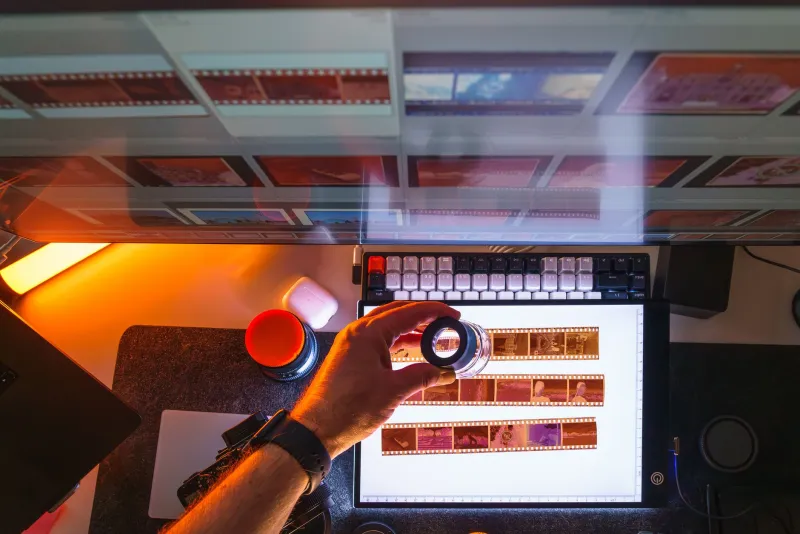
Outside Austin, a garage studio has built a proof wall of its own. Contact sheets, timecode strips, and index cards are pinned above a small editing desk. The filmmaker screens new assemblies for neighbors and fellow artists on a bedsheet stretched across the garage door. The screenings are not parties. They are appointments with the work. After each one, the filmmaker cuts until the proof stops showing the seam.
Why the Messy Middle Matters
Inviting audiences into the middle of the process is not without risk. Feedback can flatten a film if it is treated as instruction rather than evidence. A room of invited viewers is not a representative public. The filmmaker must learn to read a proof without letting the proof make the work. But the printmaking analogy holds here too: a proof is meant to be read, not obeyed.
The larger shift is cultural. For years, the American experimental short has been presented as a finished object, arrived from nowhere, complete and slightly mysterious. The proof screening admits that the object has a workshop. It lets audiences see the registration marks. It treats the local room as part of the edition rather than a waiting area for the festival.
Toward a Working Edition
The final edition is still singular. The proof screenings do not replace the premiere; they precede it. But they change what the premiere means. The film arrives with evidence—notes, cuts, a record of what was tried and discarded. The audience is not only receiving the print. It is receiving the proof of the print.
In 2026, that ritual is still small, scattered across storefronts, basements, and garages. It is not a movement with a manifesto. It is a habit of working in public, with pencils in hand, before the edition is struck. For a cinema carved in ink and light, that habit feels native: the block is cut, the proof is pulled, and the room leans in to see what the pressure has revealed.