The Envelope as Argument: Print Dossiers and the Slow Courtship of American Micro-Cinemas
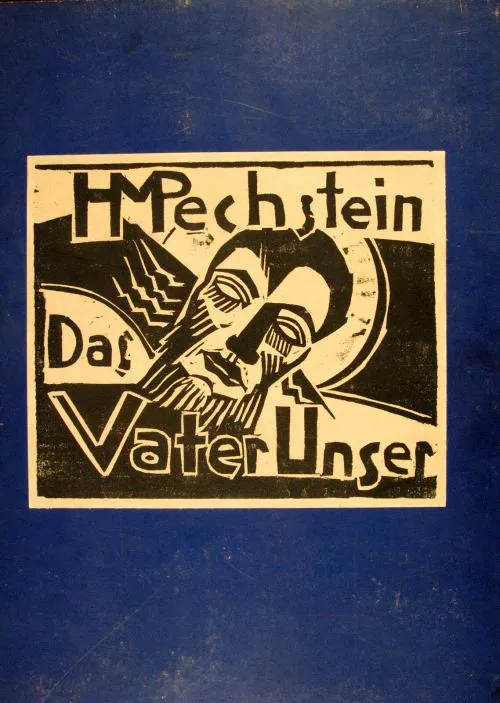
Photo: Max Pechstein (1881-1955), Public domain, via Wikimedia Commons
On a desk in a micro-cinema office in the American Midwest, a nine-by-twelve envelope sits beside a laptop. The laptop holds forty unopened submission links. The envelope holds six woodcut stills, a hand-pulled program card, a one-page screening history, and a short letter from a filmmaker. As of late 2026, this is not a quaint exception. It is a recognizable pitching strategy among American experimental filmmakers who want a programmer to encounter their work as a made thing rather than as another tab in a browser.
The shift is small but consequential. For decades, the distribution of experimental short films has depended on personal correspondence, festival circuits, and the careful maintenance of relationships. Digital submission platforms streamlined that work, but they also flattened it. A link can be forwarded, misplaced, or buried under a hundred others. A print dossier cannot be quite so easily ignored. It occupies space. It asks to be handled.
The Dossier as Curatorial Argument
Print portfolios are often described as nostalgic. That framing misses their function. In practice, a physical dossier is a curatorial argument in miniature. It asks the filmmaker to decide what matters and in what order: a still that shows texture, a card that demonstrates typographic care, a screening history that establishes context without overstatement. The format imposes editing. A digital press kit can expand indefinitely; an envelope cannot.
This constraint is useful. A woodcut still, reproduced at a modest size, reveals whether a film’s surfaces will survive translation into print. A hand-pulled program card shows how a filmmaker thinks about the screening as an event rather than merely a file. An annotated screening history—dates, venues, perhaps a line about the print format or the room—offers programmers a record of how the work has already met audiences. None of these elements guarantees quality. Together, however, they make a case that is slower and more specific than a generic submission link.
What Travels in the Envelope
The strongest dossiers tend to be economical. They include a one-page letter, a compact set of stills, a program card or small print, and a screening history. Some filmmakers add a QR code that leads to a trailer or a full-resolution excerpt; the physical object remains the introduction, not the entire archive. The best examples avoid lavish production. A portfolio that looks expensive can raise reasonable questions about access and priorities. A portfolio that looks considered—clean printing, legible typography, careful sequencing—does something else. It signals that the filmmaker understands the venue as a place where printed matter and projected light already coexist.
In the American micro-cinema circuit, this matters. These venues often operate with small staffs, limited storage, and programming calendars built months in advance. A dossier that arrives by mail enters a different workflow from a digital submission. It can be placed in a folder, passed around a programming meeting, pinned above a desk, or kept with the venue’s own printed ephemera. Programmers remember objects. They remember the filmmaker who sent a card that matched the film’s palette, or a screening history annotated with the exact gauge and running speed. The memory is not purely sentimental; it is practical. It gives a curator something to refer to when a slot opens or a thematic series takes shape.
The Programmer’s Side of the Table
From the venue’s perspective, the print dossier is not automatically welcome. Some micro-cinemas lack the staff to process postal mail, and some explicitly prefer digital submissions for accessibility and record-keeping. Filmmakers who send unsolicited packages without checking a venue’s guidelines risk wasting materials and goodwill. The practice works best when it is invited, or when it follows an existing correspondence. A short query first—does the programmer accept print portfolios, and what should they contain?—preserves the spirit of the gesture without turning it into an imposition.
The format also carries a risk of gatekeeping. Physical portfolios require time, postage, printing access, and a certain comfort with self-presentation. If curators begin to treat expensive dossiers as a sign of seriousness, they will quietly narrow the field. The corrective is straightforward: judge the work, not the envelope. A plain folder with a strong still and a clear letter can be as persuasive as a letterpress edition. The point is attention, not luxury.
Slower Distribution, Different Records
What the print dossier changes most is tempo. Digital pitches move quickly and disappear quickly. A physical portfolio creates a small pause. It may prompt a reply, a request for a screener, or a note that the timing is wrong but the work is worth revisiting. In a field where relationships often matter as much as individual submissions, that pause has value. It also gives printed matter a second life. The program card that began as a pitch can become a leave-behind at a screening; the woodcut still can be displayed in a venue’s lobby; the annotated history can become part of a filmmaker’s own distribution record.
This is not a replacement for digital infrastructure. Trailers, screeners, captions, and accessible submission systems remain essential. The print dossier works best as a companion—an argument made in ink and paper beside the link that makes viewing possible. For American experimental filmmakers in 2026, that combination may be the most honest version of the pitch: a film that lives in light, introduced by an object that can be held.